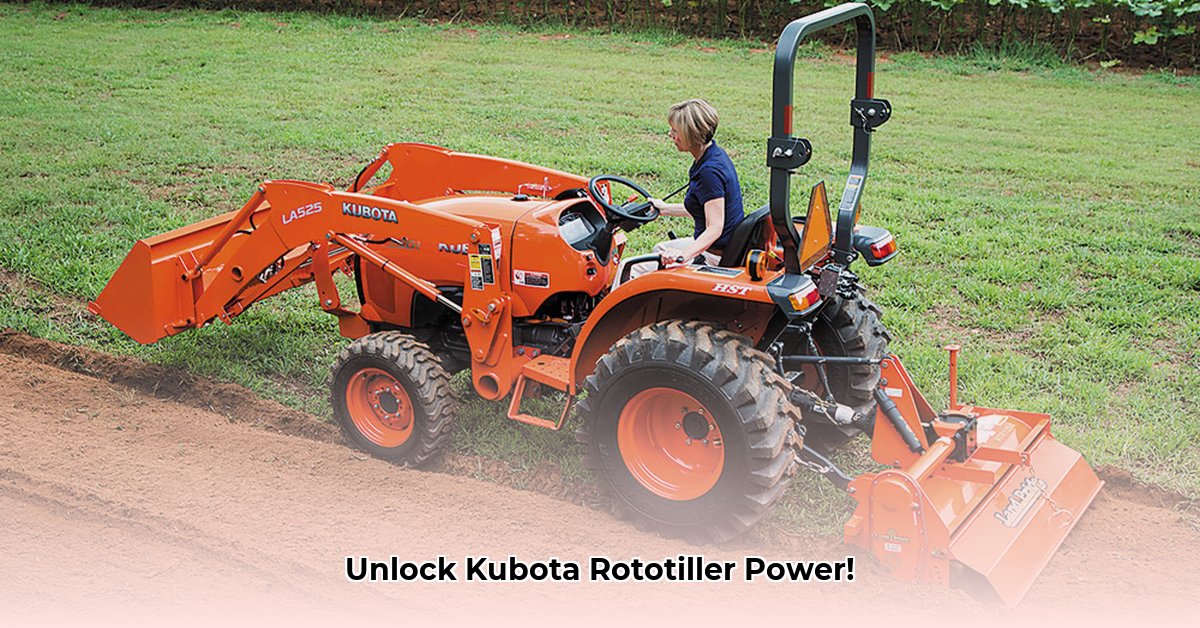
Choosing the right rototiller attachment for your Kubota tractor is crucial for efficient and effective land preparation. This comprehensive guide will help you navigate the selection process, considering factors like soil type, budget, and desired performance. We'll compare Kubota's offerings with reputable third-party alternatives, providing a step-by-step installation guide and essential maintenance tips. For additional information on Kubota tractor attachments, see Kubota Tractor Attachments.
Understanding Your Rototiller Needs
Before diving into specific brands and models, consider these key factors:
- Soil Type: Sandy soil will require a different tiller than heavy clay. Does your soil need light tilling or aggressive breaking?
- Budget: Kubota rototillers typically command a premium price. Are you willing to pay more for brand recognition and a warranty, or would a third-party option better fit your budget?
- Tilling Area: How much land do you need to till? This will dictate the size and power of the rototiller you'll need. Consider tilling width as a key specification.
Kubota Rototiller Attachments: A Closer Look
Kubota manufactures a range of rototillers designed for their tractors. These attachments usually integrate seamlessly and come with comprehensive warranties. However, they often command a higher price point compared to third-party options. Key features to consider include:
- Tilling Width: The width of the tilling area (often measured in inches or centimeters).
- Tilling Depth: How deep the tiller can penetrate the soil (often expressed in inches).
- PTO Horsepower Requirement: The minimum horsepower your Kubota tractor needs to operate the tiller effectively.
- Warranty: The length and coverage of the warranty offered by Kubota.
Are the benefits of a Kubota rototiller's reliability and warranty worth the increased cost? The answer depends on your individual needs and financial priorities.
Exploring Third-Party Rototiller Options
Many reputable companies, such as Everything Attachments, manufacture rototillers compatible with Kubota tractors. These often offer comparable performance at a lower cost. However, thorough research is essential to ensure compatibility and quality. Key considerations include:
- Manufacturer Reputation: Research the manufacturer's history and customer reviews before purchasing.
- Compatibility: Verify that the rototiller is explicitly compatible with your Kubota tractor model.
- Warranty: Carefully review the warranty offered by the third-party manufacturer. This might be shorter or have more limitations than a Kubota warranty.
- Build Quality: Look for tillers made from durable materials, with robust construction.
Rhetorical Question: Given the price difference, is the added expense of a Kubota rototiller justified by its warranty and perceived build quality?
Detailed Comparison: Kubota vs. Third-Party Rototillers
| Feature | Kubota Rototiller | Third-Party Rototiller |
|---|---|---|
| Price | Higher | Lower |
| Warranty | Comprehensive, typically longer | Varies; potentially shorter or limited |
| Compatibility | Guaranteed fit | Requires verification |
| Build Quality | Generally high | Varies; research individual manufacturers |
| Availability | Readily available through Kubota dealers | May require online ordering or local sourcing |
Step-by-Step Rototiller Installation Guide
Safety First! Always consult your Kubota tractor's and the rototiller's owner's manuals before starting. Proper safety procedures are essential.
- Engage Parking Brake: Ensure the parking brake is firmly engaged.
- Lower Three-Point Hitch: Lower the three-point hitch to its lowest position.
- Align Rototiller: Carefully align the rototiller with the hitch pins.
- Connect PTO Shaft: Securely connect the power take-off (PTO) shaft to both the tractor and the rototiller.
- Raise Three-Point Hitch: Slowly raise the three-point hitch to lift the rototiller into position.
- Check Connections: Before engaging the PTO, double-check all connections for security.
Maintaining Your Rototiller: Tips for Longevity
Regular maintenance is crucial for the longevity and efficiency of your rototiller.
- Lubrication: Follow the manufacturer's recommendations for lubricating moving parts.
- Inspection: Regularly inspect the rototiller for loose parts, wear and tear, and signs of damage.
- Blade Sharpness: Sharp blades are essential for efficient tilling. Sharpen or replace blades as needed.
Quantifiable Fact: Regular maintenance can extend the lifespan of your rototiller by up to 25%, saving you money in the long run.
Troubleshooting Common Issues
Common rototiller problems include:
- Loose Bolts: Regularly tighten all bolts and fasteners.
- Worn Blades: Replace worn or damaged blades immediately.
- PTO Issues: If the PTO isn't engaging, consult your owner's manual or seek professional help.
Conclusion: Choosing the Right Rototiller for You
Selecting the right rototiller attachment involves weighing brand reputation, cost, and performance. Kubota offers reliability and a warranty, while third-party options provide cost savings. Careful consideration of your soil type, budget, and tilling needs is crucial for making an informed decision. Remember to prioritize safety throughout the entire process.